A public education brief from The Learning Observatory | A review of Hawaiʻiʻs 2025–26 Strive HI results
The headline out of the state Department of Education this fall was a measured one: Hawaiʻi’s public schools are nearing their pre-pandemic footing.
There's truth in it. The 2025-26 Strive HI results show math proficiency rising for a fourth straight year, better attendance, and a graduation rate at its highest in years. A recovery that once looked stalled is still inching forward.
But a review owes readers the second question, the one the press release softens. Nearing pre-pandemic — from how far down, and at what pace? Because a system can be recovering and still fall short of where it needs to be, and this year it also slipped backward in two places that matter. Hawaiʻi is doing both at once.
The Recovery Is Real, and Uneven
Start with the good news, because it's real.
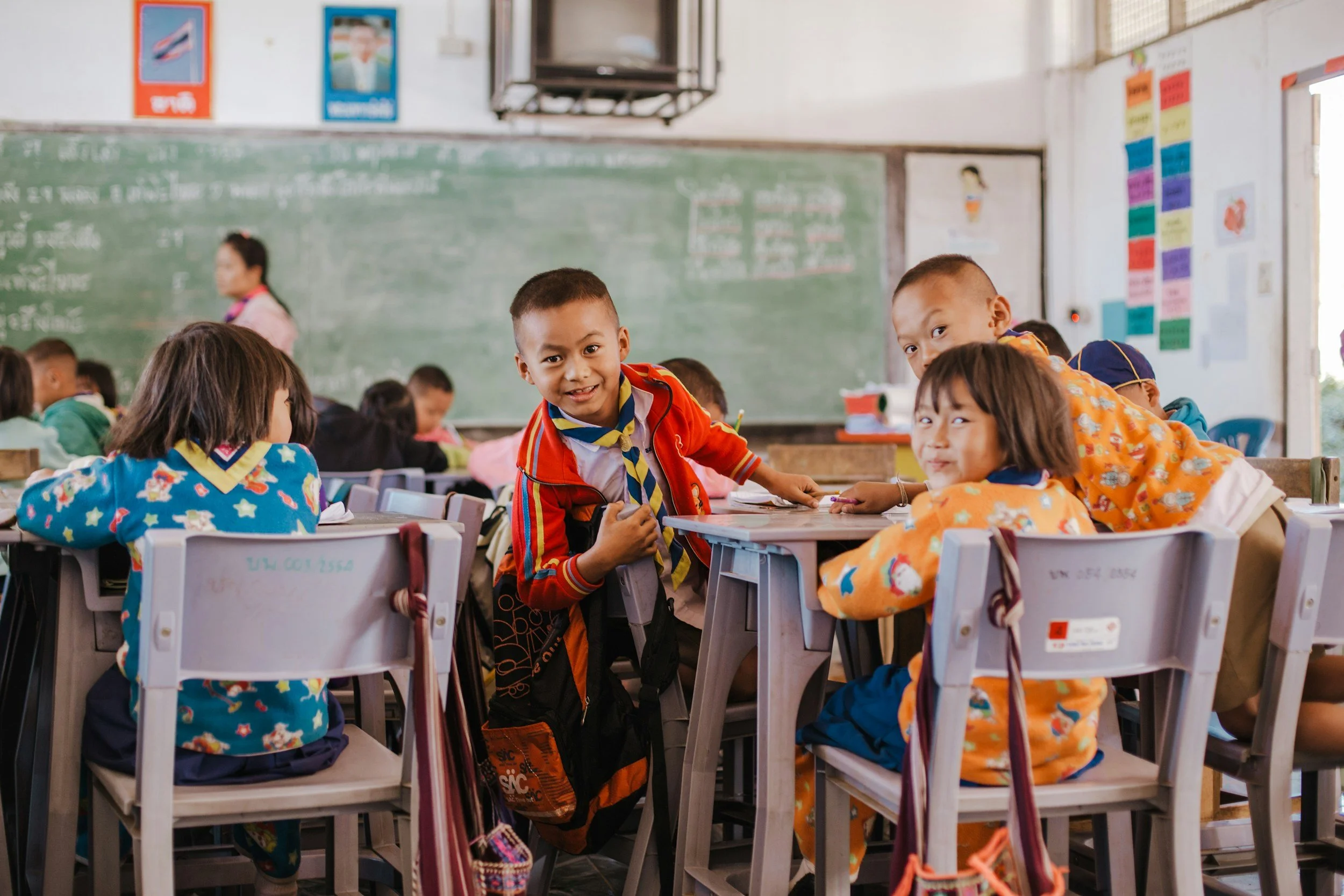
Kids in the classroom. Photo by Martin Heller / Unsplash
Math proficiency climbed again, to 42.5 percent, its fourth consecutive annual gain, now within a whisker of the 43.1 percent the state posted before the pandemic. Science held steady at around 44 percent. Regular attendance continued its long climb back, reaching 76.8 percent, up from 66.1 percent in 2021-22. And on-time graduation edged up to 87 percent on preliminary Class of 2026 results, its strongest showing since before the pandemic.
The national comparison is flattering, too. Among the states in the Smarter Balanced testing consortium with 2025-26 results, Hawaiʻi posted the second-highest language arts proficiency and the third-highest in math. After the disruption every school system absorbed, that standing is not nothing.
But “recovery” implies a single upward direction, and this year the data refuses to move as one. Two measures went the other way, and a review has to say so.
Where It Slipped
Language arts proficiency fell, from 53.8 percent to 53.2. The drop is small, but the direction matters: while math climbed back toward its pre-pandemic level, reading dipped below its own. For the first time in the recovery, the state's two core subjects are moving in opposite directions.
The sharper reversal is college-going. Last year brought a genuinely hopeful number; postsecondary enrollment jumped to 53 percent for the Class of 2024, finally breaking a four-year plateau. This year it fell back to 51 percent for the Class of 2025. One good year, then a return to the pattern. The plateau, it turns out, hadn't broken after all.
Neither number is a crisis on its own. Together they're a caution: recovery isn't a ratchet. Gains can give ground.
The Floor Is Still Low
Even where the arrows point up, the levels tell their own story. When math proficiency reaches 42.5 percent, “up again” still means most students are not proficient in math. Most are not proficient in science. Language arts, at 53.2 percent, clears the halfway mark but not by much.
These are the state's core academic measures, and on all three, roughly half or more of students remain below the bar. Break math into its four performance bands and a full third of students, 33 percent, land in the lowest one, having “not met” the standard at all. The department has set 2029 targets of 65 percent in language arts and 50 percent in math. From where things stand, that's a 12-point climb in reading over three years, in a year reading just fell, and nearly 8 more points in math. Returning to the pre-pandemic baseline, as the superintendent himself put it, was never the goal. It's the floor.
Improvement from a low floor is real improvement. It is also still a low floor. A review that reports the gains without reporting the levels tells half the truth.
Three Gaps the System Hasn't Closed
Beneath the averages, three structural gaps stand out.
The first is attendance. Even at an improved 76.8 percent, regular attendance means nearly one in four students still misses 18 or more days a year. The department revised this very measure two cycles ago from “chronic absenteeism” to “regular attendance”, a quiet signal that showing up remains a live problem. And this year's data put a price tag on it: students who attend regularly are proficient in math at more than double the rate of those who don't —47 percent versus 22 percent — and graduate on time at 94 percent versus 70 percent. Attendance isn't a side metric; it's upstream of everything else.
An empty classroom. Photo by Ivan Aleksic / Unsplash
The second is the drop between finishing and continuing. Hawaiʻi now graduates 87 percent of its students on time but sends only 51 percent to college the next fall — and that gap just widened, because graduation rose while college-going fell. A 36-point spread between earning a diploma and starting postsecondary is the largest single leak in the pipeline, and it got bigger this year, not smaller.
The third is variation itself. The statewide averages describe almost no actual student. The department's own equity measure makes it plain: in 2025-26, 58 percent of students who aren't high-need were proficient in math, against just 29 percent of those who are — English learners, economically disadvantaged, and special-education students. In language arts the split was 73 to 39. These aren't edge cases: nearly six in ten Hawaiʻi public school students carry at least one high need. A single state number smooths over a thirty-point gap that defines most students' actual experience.
Why Growth Is the Number to Watch
If there's one measure that explains this year's mixed results, it's student growth — and it had already flashed a warning.
Growth doesn't ask whether a student is proficient today. It asks whether they made a typical year's worth of progress, compared with students who started where they did. In 2025-26, 59 percent of students cleared that bar in language arts — a slim majority, and because the state norms it against pre-pandemic 2018-19 patterns, clearing it means out-learning the system's own past self rather than recovering to a lowered standard. That's genuinely something.
But the trend under that number is the tell. Language-arts growth surged during the immediate post-pandemic rebound — it hit 64 percent in 2021-22 — then drifted back into the high 50s, and this year it eased again, from 61 percent to 59. The engine that pulls proficiency upward isn't accelerating; it's slowly losing steam. That's exactly what produces a year like this one: math inching up, reading slipping, nothing moving fast. It squares with what officials told the Board of Education — proficiency has to rise faster over the next three years to hit the 2029 targets. Yet on the current trajectory, language arts has been essentially flat for five years and math is gaining about a point a year, when it needs to gain more than two. Holding a steady pace isn't the same as closing a gap. To close one, you have to accelerate — and right now the pace is drifting the wrong way.
The Fair Verdict
So where does that leave a reader trying to make sense of Hawaiʻi's schools?
The direction is mostly right, and that deserves to be said clearly. Math has nearly recovered, attendance keeps climbing, more students are graduating, and the state stacks up well against its peers. But the recovery is uneven and incomplete — reading slipped below its pre-pandemic mark, college-going gave back last year's gain, a quarter of students are still chronically absent, and the 2029 targets sit a long, accelerating climb away.
Rising is still the right word for most of this year. It just isn't the same as arriving, and this year was a reminder that the two can even move apart. The useful public conversation isn't whether the schools are improving — on balance they are — but whether they're improving fast enough, in every subject, for which students, to reach the goals the state set for itself. On that question, the data says: the floor is nearly rebuilt, the ceiling is still far off, and the pace needs to pick up.